AI receptionist
An AI receptionist is software that answers your business phone and handles calls in natural, spoken conversation — the same front-desk work a human receptionist does, but available around the clock with no hold queue. It can book appointments, answer common questions, take messages, and route callers to the right person, then hand off to a human whenever a call needs one.
If your business runs on inbound calls — a dental practice, a clinic, a restaurant — an AI receptionist exists to make sure none of those calls go unanswered.
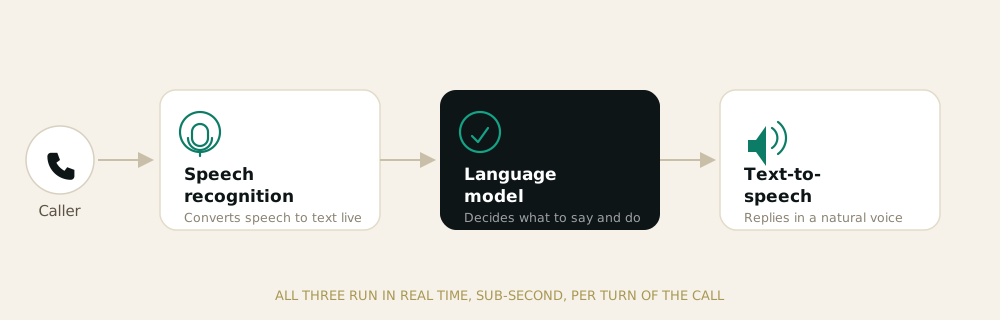
Under the hood, an AI phone agent chains three technologies together in real time:
The whole loop runs fast enough that the conversation feels like talking to a person rather than a menu. Because the language model is trained on your scripts, services, and FAQs, the agent answers in your business's own terms — not generic boilerplate.
A capable AI receptionist handles the calls that make up most of a front desk's day:
Many of these actions only matter if they land in the tools you already run — see how AI voice agents for custom integrations connect a call directly to your calendar, CRM, or ordering system instead of leaving someone to enter it by hand.
These often get confused, but they solve different problems:
We cover this comparison in more depth in AI receptionist vs. answering service.
Any business where a missed call means a lost customer benefits most. That includes:
See the full breakdown of what it answers, books, and routes on our AI receptionist page.
A well-built AI receptionist uses natural, human-sounding voices and real back-and-forth conversation, so most callers simply feel like they reached a helpful, responsive front desk. The goal isn't to trick anyone — it's to answer quickly, get the caller what they need, and pass them to a person the moment that's the right thing to do.
Setting up an AI receptionist is far quicker than hiring for the same coverage. The typical path is:
If you want to see it on your own call flow, book a free demo and hear an AI receptionist handle a real scenario before you commit.
Join hundreds of teams running their phones on AI — without sounding like one. See a live agent on your own call flow in 30 minutes.